Choose a Digital Piano or a Traditional Acoustic Piano?
Nov. 15th,2025 Mr. Huscher
This topic remains debated. It goes without saying that digital pianos and traditional acoustic pianos are fundamentally different in their sound production technology.
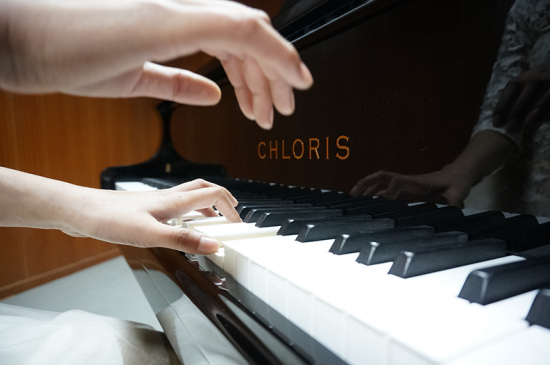
Although modern digital pianos feature weighted keys (often called hammer action), their touch sensitivity and dynamic response are significantly inferior to those of a traditional piano. Furthermore, the gradation in dynamic expression is not nuanced but rather rudimentary.
In piano pedagogy, the most frequently emphasized concepts—touch and musical expression—are rooted in the traditional piano. This is because the physical act of playing and the resulting tone are an integral whole; the connection between touch and sound is instantaneous. The latency in digital pianos creates a disconnect for the performer between their touch and the resulting timbre. Therefore, from this perspective, choosing a traditional piano for learning is the most advisable course of action. It is also crucial for fostering a correct understanding and appreciation of piano music in beginners.
The most significant challenge for beginners who use a digital piano for an extended period arises when they switch to a traditional piano. They must spend considerable time correcting technical habits ingrained from long-term practice on the digital instrument. This process also involves re-calibrating their cognitive understanding of musical expression. If their determination is not strong, it is highly likely that during this transition, beginners may become discouraged and lose their initial enthusiasm for continuing piano studies. For some children and beginners, this is a critical juncture. While digital pianos are usable in the learning process, they should serve as auxiliary tools for practice, not as the primary instrument.
If conditions allow for placing a traditional piano at home, then one should undoubtedly choose it.
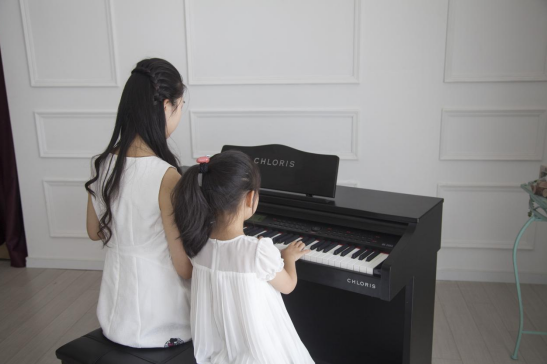
Advantages of Digital Pianos:
Compact and space-saving design
Flexible placement options
No tuning or maintenance required
Relatively affordable
A wide variety of instrument sounds and built-in accompaniment functions
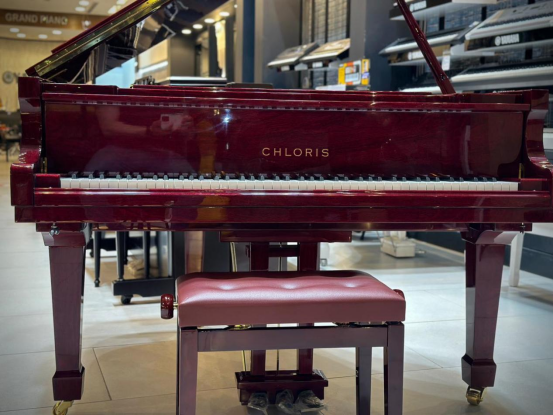
Advantages of Traditional Pianos:
A unique, irreplaceable character
Authentic sound: The inherently warm and complex tone is very special because it is produced not by simple speakers, but by the intricate interplay of the instrument's physical components. The subtle variations in timbre, the sympathetic resonance of strings, the quality of wood, the soundboard construction, the distinct tactile feedback of real wooden keys, and the refined hammer action—these characteristics are crucial factors that attract connoisseurs, performing artists, and even non-professionals to the traditional piano.

In conclusion, no matter how advanced digital pianos become, they still fall short of traditional pianos. It is akin to the fact that even the most advanced AI cannot surpass human wisdom. Technology can bring convenience, but it lacks soul and warmth.





Mail:info@chlorispiano.com
Tel:86-18121133783
www.chlorispiano.com
技术支持:网新科技(www.ibw.cn) 沪IPC 备14053625号