The Physical Mechanism and Influencing Factors of Piano Timbre Formation
January 15, 2025, by Mr. Huscher
The factors influencing piano timbre are highly complex. On a macro level, everything from design and material selection to craftsmanship and humanistic elements affects the final positioning, characteristics, trends, plasticity, and quality of a piano's timbre. The following four main factors, or mediums, are elaborated in detail.
Series One: Physical Characteristics and State of the Hammer
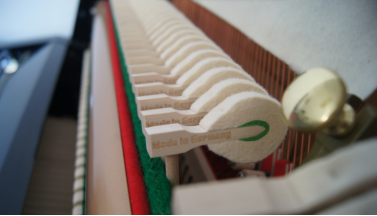
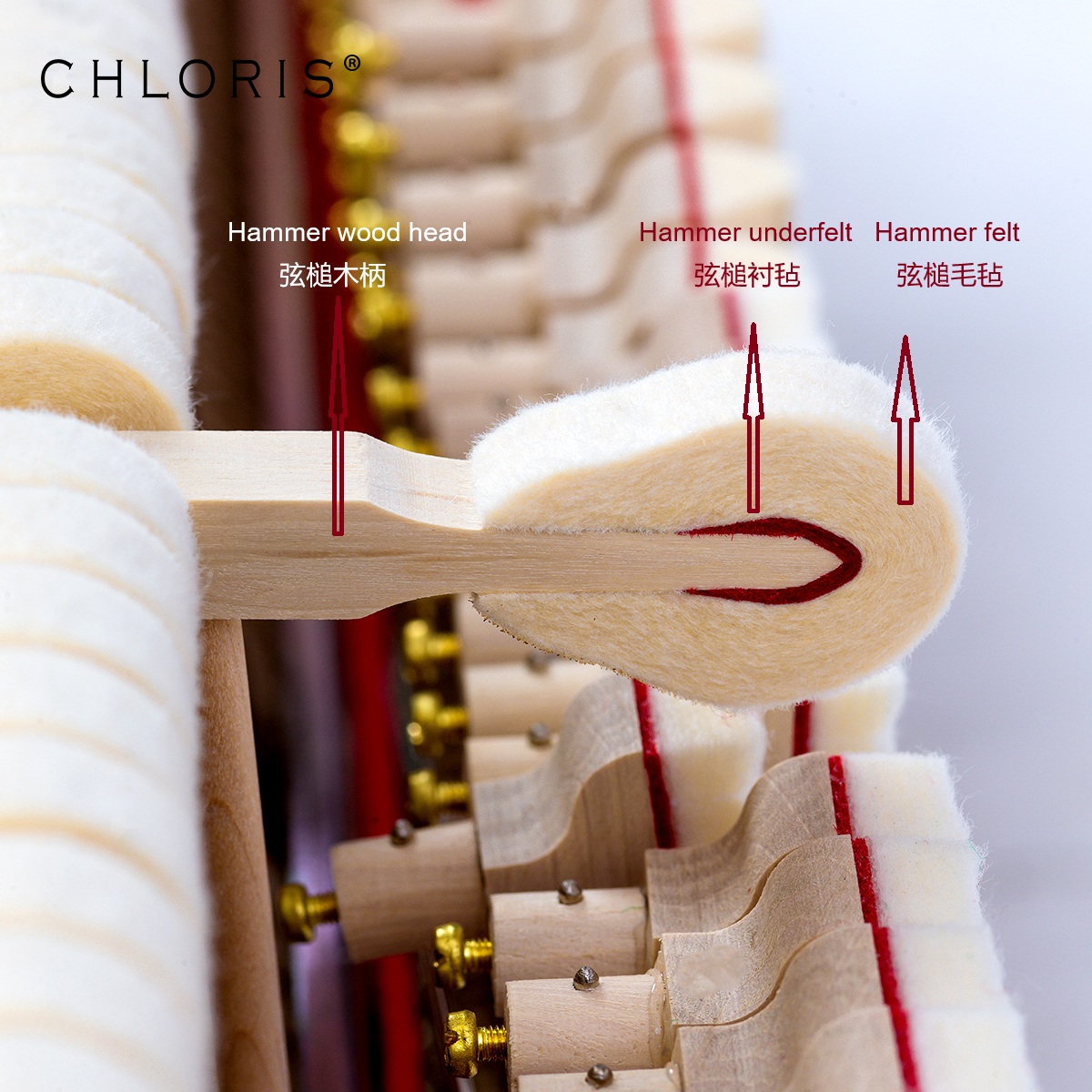
The hammer is the "active" shaper of piano timbre, and its physical properties directly determine how it strikes the strings.
Hardness and Nonlinearity of the Hammer:
Nonlinear Stiffness: Hammer felt is not a linear spring. When playing softly (Pianissimo), only the soft outer layer of the felt is compressed, resulting in longer contact time with the string, which suppresses high-frequency overtones and produces a soft, mellow sound. When playing loudly (Fortissimo), the string compresses into the harder inner layer of the felt, causing the hammer's effective stiffness to increase sharply. This shortens the contact time and excites rich high-frequency overtones, making the sound brighter or even sharper. This ability to alter timbre with varying playing intensity is at the core of a piano's expressiveness.
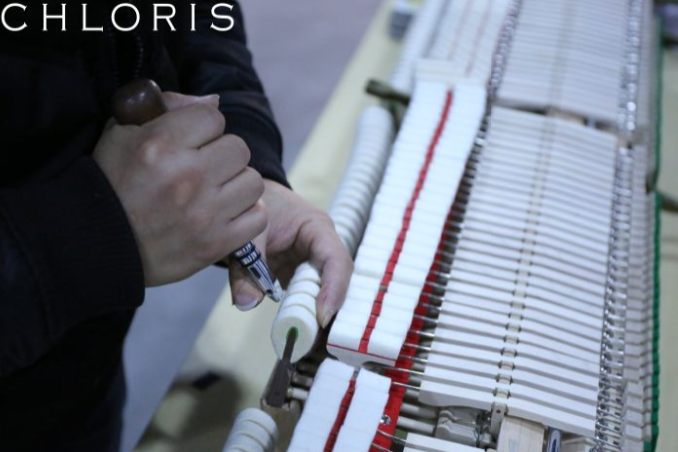
Voicing: Technicians regulate the timbre by needling the hammer felt (to soften it) or applying hardening agents (to stiffen it). An overly hard hammer produces a harsh, metallic sound, while an overly soft hammer results in a dull sound.
Contact Time:
The contact time between the hammer and the string determines the spectral envelope. Shorter contact time excites a wider frequency spectrum (richer in high frequencies), while longer contact time lowers the cutoff frequency (resulting in a darker sound). Contact time is influenced by the hammer's mass and hardness.
Strike Point Position:
Node Suppression: The strike point is typically set at 1/7 to 1/9 of the string's length (commonly 1/8) to suppress dissonant 7th or 9th partials (overtones). If the strike point changes, the intensity distribution of the overtone series will vary dramatically.
Adjustments in the High Register: In the highest registers, to achieve sufficient energy and brightness, the strike point ratio is adjusted from 1/8 to 1/10 or even shorter.
Flexibility of the Hammer Shank:
The hammer shank is not a rigid body. At the moment of striking, the bending vibration of the shank causes the hammer head to produce a slight horizontal sliding motion (scuffing). This friction and fine-tuning alter the contact force spectrum, thereby subtly changing the timbre.





Mail:info@chlorispiano.com
Tel:86-18121133783
www.chlorispiano.com
技术支持:网新科技(www.ibw.cn) 沪IPC 备14053625号