When objectively evaluating the quality of a piano, we generally assess it based on three aspects: the materials used, the playability, and the sound/tone. Among these, the "playability" or "touch" (Spielart / Touch) is one of the core standards for judging the quality of a piano. It determines whether the player can control tone and volume precisely and comfortably. The playability of a piano mainly depends on the following dimensional factors:
The geometric leverage ratio between the key and the action
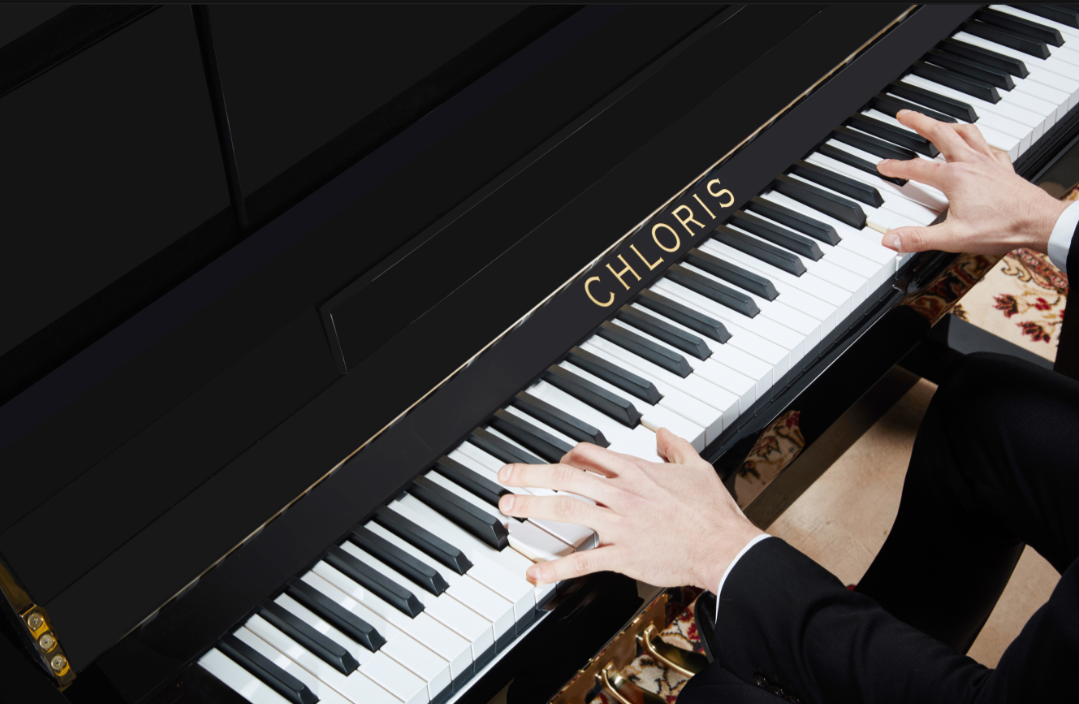
Matching key dip with hammer stroke distance: The correct operation of the action relies on a highly precise proportional relationship between the "key dip" (i.e., key travel depth, typically 9.5 to 10.5 mm) and the "hammer stroke" (i.e., the distance the hammer travels to strike the strings, typically 44 to 50 mm). If the key dip is too large relative to the hammer stroke, the mechanical parts are forced into excessive motion. If the key dip is too shallow, the action feels weak and difficult to control.
Balance pin position: The key is a lever, and the ratio of its front to back lengths (typically designed to be close to 2:3) along with the position of the balance fulcrum directly determines the transmission of force. If the balance point is set incorrectly, the touch becomes "sticky, sluggish, and fatiguing."
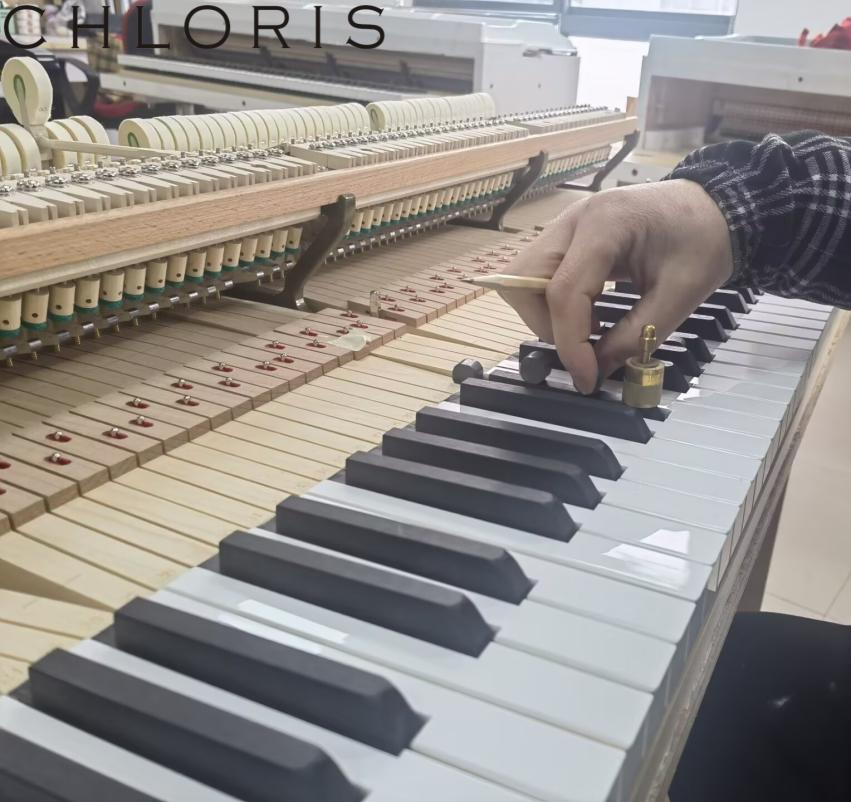
Absolute length of the key: Longer keys provide smoother lever movement, making long playing sessions more comfortable and less fatiguing.
Touchweight and system inertia
Static downweight and upweight: The ideal static downweight is typically between 50 and 55 grams, while when the key returns, it should be able to lift approximately 20 to 27 grams of weight.
Counterweighting and mass: This weight can be adjusted by adding or removing lead weights in the front or rear of the key, or by changing the mass of the hammers (by sanding, replacing, or adding weight to them). However, changing the counterweighting and hammer size also changes the overall system inertia of the action, which not only affects the static weight but also profoundly influences the feel during dynamic acceleration.
To be continued...





Mail:info@chlorispiano.com
Tel:86-18121133783
www.chlorispiano.com
技术支持:网新科技(www.ibw.cn) 沪IPC 备14053625号