Summary of the Advantages and Disadvantages of Solid and Composite Soundboards
July 15, Mr. Huscher
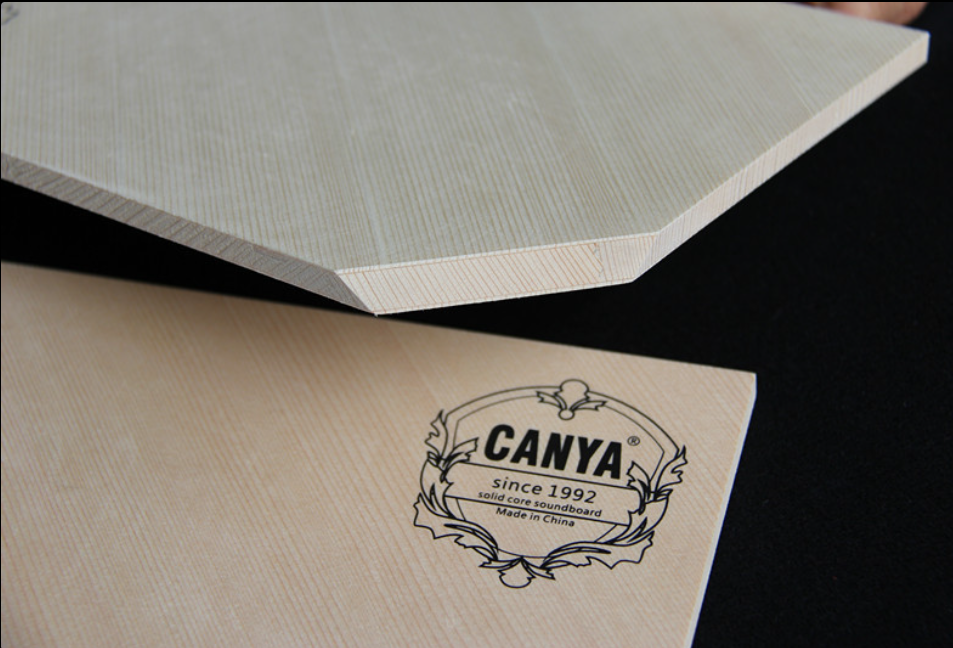
Solid Soundboard
Advantages: Offers the best acoustic vibration performance, with high sound power in the treble and full resonance in the bass, providing a rich, pure, and evenly balanced tone across all registers. For this reason, the finest top-tier pianos must use solid spruce soundboards.
Disadvantages: Due to the characteristics of natural wood, solid soundboards undergo significant expansion and contraction under alternating extreme humidity and dryness, making them prone to cracking along the wood grain.
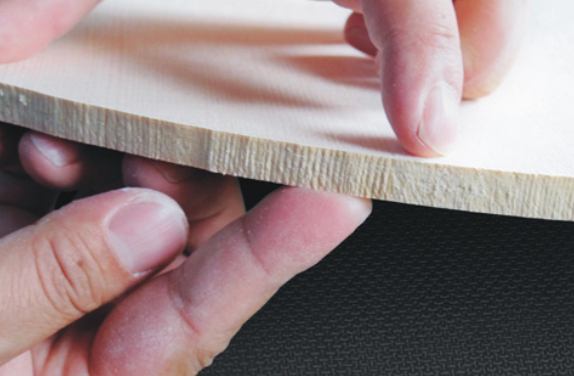
Composite/Laminated Soundboard
Advantages: Thanks to the cross-grain lamination of multiple wood layers, composite soundboards have extremely high structural stability. In particular, composite soundboards with an inclined core layer have even greater resistance to torsional deformation than solid soundboards. This construction ensures that the soundboard is unlikely to crack throughout the piano's entire service life, providing excellent resistance to extreme climatic changes in humidity and dryness.
Disadvantages: Acoustic performance is severely compromised, resulting in poor tone, a lack of tonal color, poor treble and bass response, and uneven sound production. As a result, composite soundboards are typically used only in inexpensive or low-end pianos, as a compromise solution to reduce costs or simply to prioritize durability.





Mail:info@chlorispiano.com
Tel:86-18121133783
www.chlorispiano.com
技术支持:网新科技(www.ibw.cn) 沪IPC 备14053625号