Tear open the fog of fate! What is the "ultimate truth" that Beethoven followed in his heart?
Oct. 12th ,2026 Mr. Huscher
When people mention Beethoven, many first think of "seizing fate by the throat," but in the analysis of the biographer Adolf Marx (A. B. Marx), the reason Beethoven is irreplaceable is that he always followed an extremely pure and powerful spiritual truth in his heart. This truth, deeply rooted in his soul, also completely reconstructed his musical universe!
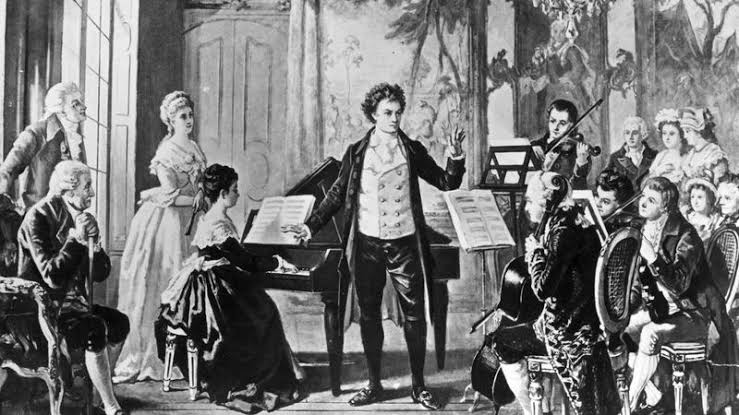
What exactly was the truth Beethoven followed in his heart?
The only reward of art lies in the work itself; never cater to worldly fame In Beethoven's view, reputation and praise are merely incidental external things; a true artist never obeys the tastes of onlookers in order to win favor. Creation itself is the only purpose and the highest reward.
In suffering, refined through contemplation of the "infinite," bear good fruit He did not rigidly adhere to dogma or formalized worship, but instead felt the sublime divinity in contemplation of nature and the endless Creator. He regarded illness and hardship as trials that wash away arrogance and prompt self-improvement, praying that through severe refinement the soul might "bear abundant fruit in good deeds."
Art is an irresistible inner necessity, uniquely and spontaneously conceived Beethoven firmly believed: "Novelty and originality are born from nature, not forced deliberately." Art is not a frivolous pastime or affectation, but a spiritual explosion that cannot be stopped once the artist is completely swallowed by the subject and inspiration, like a seed breaking through its shell.
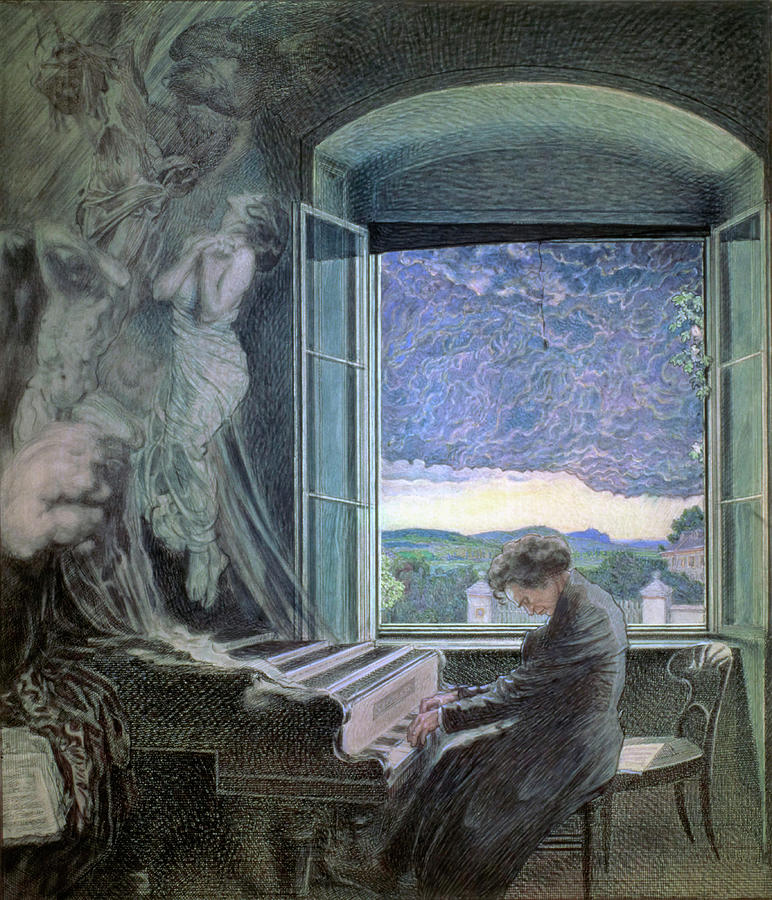
How did this truth determine his creation?
Smashing the traditional "cage of pleasantness," obeying the true expression of the spirit Classical music theory emphasizes regular harmony and the obedient resolution of suspensions, while Beethoven in works such as the Fourth Symphony frequently broke conventions, using bold suspensions and harmonic tension. Worldly critics even mocked this as a terrible "monstrosity," but Beethoven would rather abandon shallow pleasantness than fail to faithfully restore the true waves deep in the soul.
A "triumphal song of will" tearing open light from the darkest abyss When the opera's premiere failed and doubts arose from all sides, he did not flatter or retreat in the slightest, but responded directly with surging symphonic power. In the introduction to the Fourth Symphony, the music first gropes in gloomy, hollow darkness, and then the entire orchestra breaks through the haze with thunderous force, welcoming sunlike vitality—this is precisely a vivid portrayal of his inner spiritual struggle and rebirth.
Instrumental music as spiritual medium: instruments become human, life becomes sound (this is the foundation of music, and also the highest realm of the unity of self and object) Hearing loss isolated him from noisy human affairs, yet it led him to regard pure instrumental music as a holy place reflecting the mysteries of the soul. In his writing, "instrumental music became a living person, and voices and words merged into the vast torrent of music," endowing his works with the magic of a giant ruling the world of instruments.
The end: The reason Beethoven's music can still make people's blood boil across hundreds of years is precisely because he never wrote insincere notes. Taking root inward in truth and daring outward to break rules—this may be the most moving inspiration this classical giant left to every dream chaser. In which work by Beethoven do you hear this power that breaks through the fog? Welcome to chat in the comments section~





Mail:info@chlorispiano.com
Tel:86-18121133783
www.chlorispiano.com
技术支持:网新科技(www.ibw.cn) 沪IPC 备14053625号