Don't Be Fooled by Mozart! Unmasking the Double Life of Classical Music's Ultimate Chameleon
Oct. 12th ,2026 Mr. Huscher
Many young piano students and music lovers share the same confusion: Why do so many of Mozart's piano sonatas sound light and effortless — even leading some to conclude that he falls far short of Beethoven in depth, and that his works are only fit for beginners to practice on? If you've only heard these pieces, however, you may have seen nothing but Mozart's "social mask."
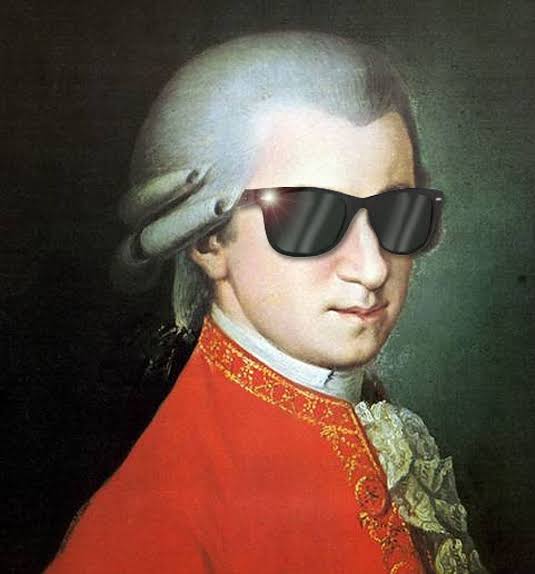
Mozart possessed the astonishing adaptability of Proteus — the sea god of Greek mythology, a name synonymous with the chameleon. In a letter to his father, he proudly declared that he could adopt and imitate virtually any compositional style. It was precisely this gift, combined with his kind-hearted nature, that split his output into two strikingly different faces:
Tailor-Made "Pieces of Convenience" (Convenienzen) To earn a living and honor personal obligations, Mozart would go so far as to "bend his own taste" to accommodate others. Like the most perceptive of actors, he could put himself in another's shoes, calculating with astonishing precision how far to dial down the difficulty to match the comprehension and playing level of a student, patron, or audience:
· Teaching pieces for aristocratic ladies: Most of his piano sonatas and variations were written for his female pupils, with the technical demands thoughtfully kept at an elementary level.
· Chamber music for amateur friends: The piano trios written for gatherings at the home of his patron Puchberg were deliberately toned down in brilliance, because the cellist and violinist were limited in ability — he refused to let his friends be reduced to awkward "background wallpaper."
· Spectacular showpieces for celebrations: At the coronation festivities in Frankfurt, well aware that the dignitaries lacked refined musical taste, he deliberately chose concertos that favored orchestral splendor and virtuosic display over emotional depth.
Mozart himself lumped these little pieces together as "trifles" (Bagatellen), and he did not mince words: "Whoever judges me on these works alone is a blockhead (Lump)!"
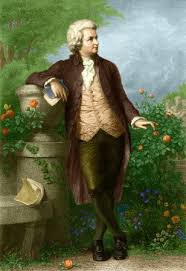
Core Masterpieces He Would Rather Starve Than Compromise Once he shed the mask of obligation and wrote for himself and for the connoisseurs who truly understood him, Mozart revealed an aloofness and profundity far ahead of his time. When his G minor and E-flat major piano quartets met with a disastrous reception in the marketplace due to their austere harmonies and complex structures, the alarmed publisher Hoffmeister warned him: "Write more accessibly, or I can no longer print your music!" Mozart shot back defiantly: "Then I shall starve — and I won't have it any other way!" To the aristocrats who found his string quartets too difficult and tore up the scores in disgust, and to his father who urged him to pander to the public, he proudly insisted that his music was only meant for those who were not "long-eared" — that is, not asses.
A Lesson for Listeners: Never mistake Mozart's people-pleasing "custom pieces" for the ceiling of his artistry. Only by distinguishing between the tender, accommodating "works of obligation" and the soul-burning "core masterpieces" can you truly understand this genius — a man of both boundless kindness and unyielding pride.





Mail:info@chlorispiano.com
Tel:86-18121133783
www.chlorispiano.com
技术支持:网新科技(www.ibw.cn) 沪IPC 备14053625号